

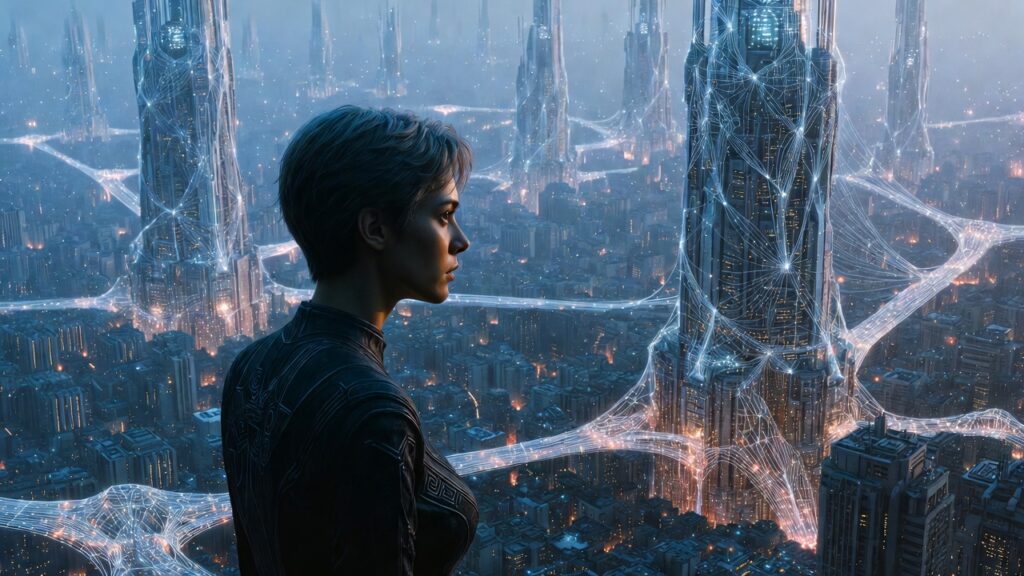
he INTJ personality—often called the Architect or the Strategist—has always lived several steps ahead of the present. INTJs do not react to the world as it is; they analyze where it is going and quietly prepare for that reality.
In the future, this way of thinking will move from rare to essential.
The Future Rewards Long-Term Thinkers
As systems grow more complex—economies, technology, geopolitics, climate—short-term thinking becomes dangerous. The future increasingly favors those who can:
- Model outcomes years in advance
- Anticipate failure before it happens
- Design structures that scale and endure
This is native territory for INTJs.
INTJs instinctively ask:
- What is the underlying system?
- Where does this break under pressure?
- How can this be redesigned from the ground up?
While others debate symptoms, INTJs work on causes.
Builders of Systems, Not Just Ideas
INTJs are not dreamers in the abstract sense. They are implementers of vision.
The future will rely on people who can:
- Turn theory into frameworks
- Transform chaos into structure
- Design processes that outlive their creators
INTJs are naturally suited for future-oriented roles such as:
- Systems architects and engineers
- AI and data strategy designers
- Policy and infrastructure planners
- Scientific researchers and futurists
- Founders of highly structured, mission-driven organizations
They do not chase visibility. They build foundations others stand on.
Power Shifts From Charisma to Competence
In the past, leadership often rewarded confidence over competence. The future is less forgiving.
As stakes rise, societies will prioritize:
- Accuracy over popularity
- Strategy over slogans
- Results over appearances
INTJs lead differently:
- Through logic, not persuasion
- Through preparation, not improvisation
- Through clarity, not emotion
They may never be the loudest voice in the room—but they are often the one people turn to when failure is not an option.
Technology Is an Extension of the INTJ Mind
While many fear automation and artificial intelligence, INTJs tend to see tools, not threats.
The future allows INTJs to:
- Externalize their thinking through models and simulations
- Test ideas before reality tests them
- Scale their insights globally
INTJs excel when technology becomes a thinking partner rather than a distraction. They are not overwhelmed by complexity—they are energized by it.
The INTJ’s Main Risk in the Future
The greatest danger for INTJs is detachment.
When surrounded by inefficiency, INTJs may:
- Withdraw emotionally
- Dismiss human factors as obstacles
- Underestimate the power of trust and morale
The future will not only require brilliant systems—it will require systems that people actually adopt.
The growth challenge for INTJs is integration:
Logic must meet humanity, or it fails.
The World Will Run on What INTJs Design
Most people will never know the names of the INTJs shaping the future.
They will only experience:
- Systems that work
- Structures that hold
- Technologies that quietly improve life
And that is exactly how INTJs prefer it.
The future does not ask INTJs to become warmer, louder, or more social than they are.
It asks them to build responsibly, account for human reality, and design for the long game.
Because when everything else changes, what endures is structure.
And INTJs are the ones who create it.